Overview
This project builds an AI‑driven system that automatically classifies retinal images into six categories: normal, age‑related macular degeneration (AMD), cataract, glaucoma, myopia, and non‑eye images. The goal is to support early screening and reduce preventable vision loss by providing fast, consistent predictions.
Approach
- Preprocessed fundus images with resizing, normalization, and data augmentation to improve generalization.
- Designed an Improved TinyVGG CNN in PyTorch with convolution blocks, batch normalization, and dropout to control overfitting.
- Tuned hyperparameters such as learning rate, batch size, and optimizer to achieve stable training and high accuracy.
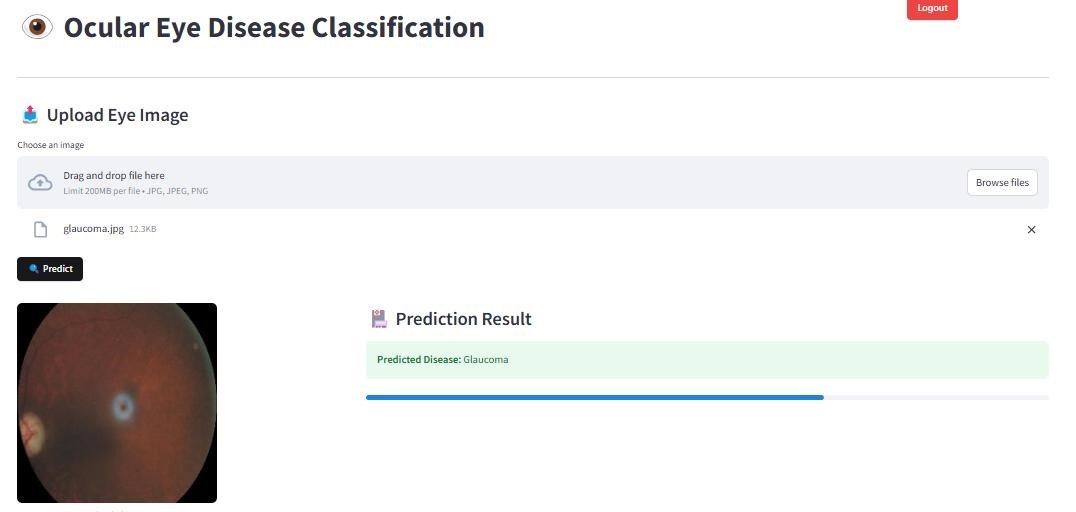
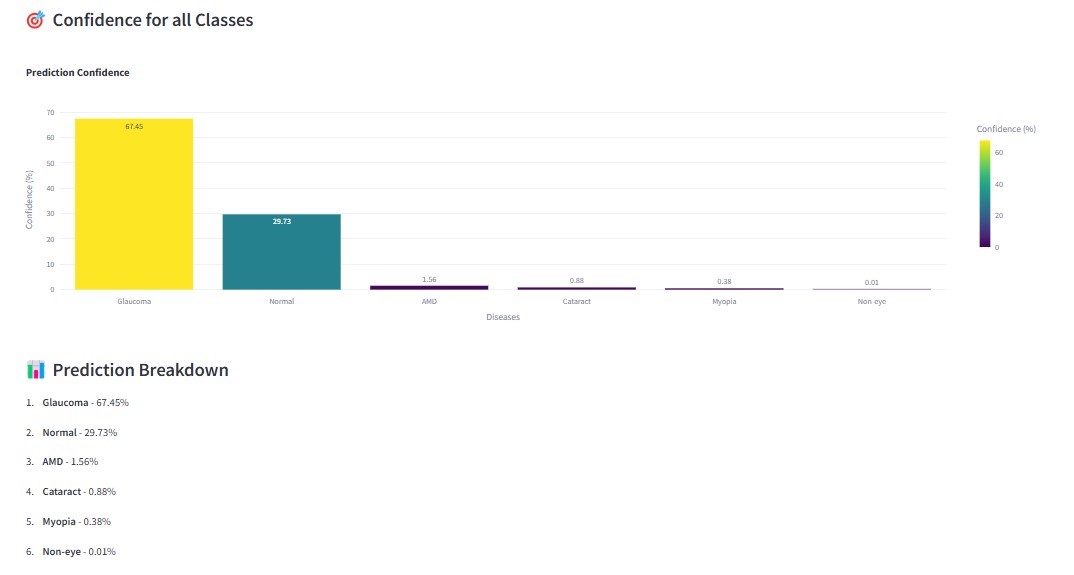
- Deployed the trained model in a Streamlit web interface to enable image upload and instant classification with confidence scores.
Impact
The system offers a lightweight, portable screening tool that can assist ophthalmologists, technicians, and non‑experts, especially in low‑resource environments. By delivering near real‑time results, it helps prioritize patients, supports tele‑ophthalmology workflows, and contributes to more accessible eye‑care.
Sample outputs
Demo video & prediction views